


- The global EAM market is projected to reach USD 16.42 billion by 2034 (Fortune Business Insights) yet most enterprises still manage 20% of their operational workflows in disconnected spreadsheets sitting outside their ERP or EAM system.
- ERP maintenance modules are built by financial architects, not operations engineers. The result is shallow maintenance execution, no condition-based triggers, and limited mobile capabilities that leave asset-intensive teams underserved.
- Mekari Officeless Studio bridges ERP, EAM, and custom operational workflows in a single ISO 27001-certified platform.
Most enterprise software evaluations reach the same impasse. Three acronyms keep surfacing ELM, EAM, ERP and every vendor claims to “streamline operations” and “improve efficiency.” Without a clear understanding of what each system actually solves, organizations risk buying the wrong platform, duplicating functionality across tools, or leaving critical workflow gaps entirely unaddressed.
Picking the wrong system costs time, money, and credibility. The right one can reduce maintenance costs by 25%, cut unplanned downtime by 30%, and pay back the investment within a single financial year. (Oxmaint, 2026)
ELM, EAM, and ERP are not interchangeable. Each addresses a distinct problem scope, serves different users, and produces different operational outcomes. This guide breaks down each system, compares them directly, and explains how to close the gaps that all three still leave open.
What is ELM (Enterprise Lifecycle Management)?
Enterprise Lifecycle Management (ELM) is the practice of managing systems, processes, and assets throughout their entire lifecycle—from planning and deployment to maintenance and retirement. It helps organizations improve efficiency, reduce risk, and maintain compliance across all lifecycle stages.
ELM is commonly used in two ways:
- As a governance framework: A strategic approach that oversees the lifecycle of systems, processes, and assets, providing the foundation for disciplines such as EAM and ERP.
- As an engineering framework: The convergence of Application Lifecycle Management (ALM) and Product Lifecycle Management (PLM), enabling organizations to manage both software and physical products within a unified environment.
ELM is particularly valuable for industries developing complex, software-driven products, such as automotive, aerospace, defense, and medical devices, where end-to-end traceability is critical.
The integration of ALM and PLM into unified ELM frameworks is now an industry-wide strategy among major players including PTC (Windchill + Codebeamer) and Siemens (Teamcenter + Polarion), aimed at supporting the growing prevalence of software-defined products. (ABI Research, September 2025)
What is EAM (Enterprise Asset Management)?
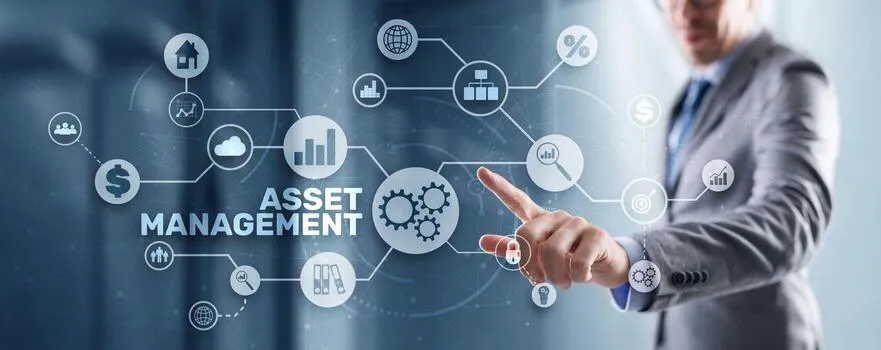
Enterprise Asset Management (EAM) is a system for managing physical assets throughout their lifecycle—from acquisition and deployment to maintenance, optimization, and replacement. Its goal is to maximize asset performance while minimizing costs and downtime.
Unlike a CMMS, which focuses primarily on maintenance activities, EAM combines maintenance management with financial planning, compliance tracking, and lifecycle analytics.
Core EAM capabilities include:
- Asset tracking and condition monitoring
- Preventive and predictive maintenance
- Work order management
- Lifecycle cost analysis and forecasting
- Compliance and safety management
- IoT-enabled asset monitoring
EAM is most beneficial for asset-intensive industries such as manufacturing, energy, transportation, healthcare, and facilities management.
The global EAM market was valued at USD 6.65 billion in 2025 and is projected to reach USD 16.42 billion by 2034, growing at a CAGR of approximately 10.7%. Asia Pacific is the fastest-growing regional market, driven by rapid industrialization and smart manufacturing investments. (Fortune Business Insights)
What is ERP (Enterprise Resource Planning)?
Enterprise Resource Planning (ERP) is an integrated software platform that connects core business functions—including finance, HR, procurement, inventory, sales, and operations—within a single system.
ERP improves organizational efficiency by centralizing data and automating cross-functional workflows.
Common ERP modules include:
- Financial management and accounting
- Human resources and payroll
- Procurement and supply chain management
- Inventory and warehouse management
- Sales and customer management
- Production planning
While most ERP systems include basic asset management features, they typically lack the advanced maintenance, monitoring, and lifecycle optimization capabilities provided by dedicated EAM solutions.
ELM vs EAM vs ERP: Key differences at a glance
The three systems address fundamentally different questions.
ELM asks: “How do we govern this product, application, or process from design through end of life?”
EAM asks: “How do we keep our physical assets running efficiently and cost-effectively?”
ERP asks: “How do we manage all the data and processes across every function of the business?”
| Dimension | ELM | EAM | ERP |
| Primary focus | Lifecycle governance for systems, products, and processes | Physical asset maintenance and optimization | Cross-departmental business process integration |
| Core users | Product engineers, R&D teams, IT architects | Maintenance managers, facility managers, operations teams | Finance, HR, procurement, operations, C-suite |
| Scope | From inception to retirement across products and applications | Physical assets from acquisition to disposal | Company-wide operational and financial data |
| Industries | Aerospace, automotive, defense, IoT/embedded-software makers | Manufacturing, energy, utilities, transportation, healthcare | Cross-industry, especially multi-department enterprises |
| ERP relationship | Provides design data that feeds into assets EAM later maintains | Integrates with ERP for financial and procurement alignment | Can include lightweight EAM modules; connects with ELM for product data |
Both EAM and ERP systems share a centralized data repository and cross-departmental access. Both provide asset maintenance functionality at some level. The difference is depth: EAM goes deep on assets; ERP goes broad across the organization.
When to choose EAM, ERP, or ELM
The right system depends on the specific problems your organization needs to solve.
Choose EAM when your organization depends heavily on physical equipment, vehicles, or infrastructure. If you are experiencing frequent asset breakdowns, rising unplanned maintenance costs, or poor asset utilization across multiple sites, EAM is the purpose-built solution. Organizations investing in IoT for real-time equipment monitoring should also prioritize EAM.
Choose ERP when your challenge is fragmented data and disconnected processes across finance, HR, procurement, and operations. If you need a single source of truth for financial reporting, payroll, and supply chain, and your maintenance requirements are relatively straightforward, an ERP with a built-in asset module may be sufficient.
Choose ELM when you design or manufacture products where hardware and software are tightly integrated. If your industry requires end-to-end requirements traceability, formal change management, and audit trails from engineering to deployment — aerospace, defense, medical devices — ELM is the appropriate governance framework.
Choose a combination when your operations are complex enough to need more than one system. Asset-intensive manufacturers typically run ERP for finance and procurement alongside EAM for maintenance execution. Organizations in regulated industries with complex product portfolios may add ELM on top of both.
The white space problem: what ELM, EAM, and ERP still leave unaddressed
Even organizations that run all three systems encounter a persistent gap. Core platforms like ERP and EAM are designed to cover roughly 80% of standard business processes.
The remaining 20% — specialized workflows, local compliance forms, operational handoffs between departments, custom approval chains — typically fall outside what standard platforms support out of the box.
This 20% is the white space. And it almost always ends up managed through disconnected spreadsheets, email threads, and manual workarounds that slow operations and increase compliance risk.
Common white space scenarios include:
- A custom approval workflow that needs to pull data from both an ERP purchase order and an EAM work order simultaneously.
- Indonesian K3 or HSE compliance documentation that does not fit any standard ERP reporting module.
- An internal logistics tracking application connecting dispatch, warehouse operations, and field couriers in real time.
- A finance team running manual audit checklists because the ERP reporting module does not support the required format.
Solving this through heavy ERP customization creates technical debt, makes every system upgrade risky, and can block future improvements entirely. The better approach: a separate, decoupled application layer that closes the white space without modifying the core system.
How Mekari Officeless closes the gap
Mekari Officeless is the enterprise custom software layer designed to fill exactly this gap. It does not replace ERP, EAM, or ELM. It bridges them — handling the operational workflows, compliance tools, and custom applications that standard platforms cannot support.
The platform offers three deployment paths, matching different levels of technical capacity:
- No-code: a drag-and-drop application builder that allows business and operations teams to build forms, workflows, tracking dashboards, and approval chains without writing a single line of code.
- Low-code: simplified JavaScript-based development for more complex logic, custom integrations, and advanced automation, guided by Mekari’s engineering team.
- Custom enterprise software service: a fully managed development service where Mekari’s engineers design and build tailored enterprise applications — either from scratch or from pre-built templates — aligned to the organization’s specific workflows and regulatory requirements.
Key platform capabilities include a visual application builder with drag-and-drop interface, built-in AI tools that accelerate workflow automation, OpenAPI architecture for connecting to existing ERP, EAM, HRIS, and third-party systems, and native integration with the Mekari ecosystem — Mekari Jurnal, Mekari Talenta, Mekari Flex, Mekari Sign, and others.
The platform is certified to ISO 27001 and built to comply with Indonesian regulations from the start, with localized onboarding support — a meaningful advantage over global platforms that require additional customization for local compliance requirements.
The right enterprise software stack is rarely one system. ELM governs the lifecycle of complex products. EAM maintains the physical assets those products depend on. ERP runs the financial and operational backbone of the organization. And Mekari Officeless Studio handles everything in between.
Ready to close the gap your ERP and EAM leave open? Explore Mekari Officeless Studio.
References and methodology
Methodology
Methodology
Articles published by Mekari Officeless are developed using trusted sources, including official data, company reports, academic research, and insights from industry practitioners. Whenever possible, we refer directly to primary sources before drawing conclusions. Our editorial team reviews and verifies the information to ensure accuracy and relevance. All references are listed so readers can trace each piece of information back to its original source.
Our editorial standards
Our editorial standards
- Primary source first: We consult official product documentation and pricing pages directly, not secondhand summaries or aggregator sites.
- Fact-checking: All product features, pricing, and claims are cross-verified against each platform’s official website at the time of writing.
- No paid placement: Tools are selected based on relevance and fit for Indonesian businesses, not commercial arrangements. Mekari Officeless is included as a first-party product and is transparently labeled as such.
- Regular review: Articles are periodically updated to reflect product changes or shifts in market relevance.
References
References
Oxmaint. ”CMMS vs EAM vs ERP: The Complete Maintenance Software Comparison Guide 2026”