


- Fragmented procurement systems create manual handoffs between sourcing, approvals, invoicing, and payments, leading to delays, errors, poor visibility, and weaker cost control.
- End-to-end procurement providers unify the entire purchasing lifecycle in one system, helping businesses improve efficiency, compliance, and spend visibility.
- For Indonesian companies navigating local compliance requirements — including NPWP-based vendor verification, e-Faktur integration, e-Meterai contracts, and BUMN or BPKP audit standards — Mekari Officeless E-Procurement delivers an end-to-end solution built on Indonesia’s most integrated SaaS ecosystem, with local regulatory knowledge and implementation support built in.
Most organizations still manage procurement in disconnected stages — sourcing in one tool, approvals through email, invoices in spreadsheets, and payments in separate finance systems. This fragmented process slows operations and increases costs.
In contrast, McKinsey & Company found that companies with mature procurement operations achieve EBITDA margins at least five percentage points higher than their peers.
End-to-end procurement providers solve this by connecting the entire procurement lifecycle — from sourcing and approvals to invoicing and payments — in one unified workflow.
This guide explains how these solutions work, how they compare to point solutions, what features to look for, and which providers best fit Indonesian businesses.
What is an end-to-end procurement provider?
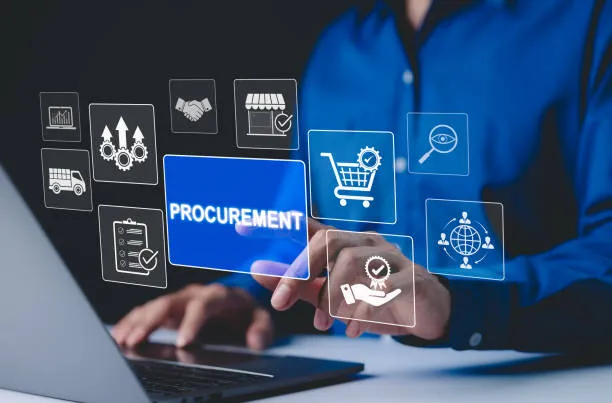
An end-to-end procurement provider is a platform or service that manages the full procurement lifecycle in one connected system, from supplier sourcing and purchase requests to invoicing, payments, and supplier performance tracking.
By centralizing these processes, businesses gain better visibility, faster workflows, and fewer manual handoffs between teams.
This differs from point solutions, which only handle one stage of procurement, such as e-sourcing, PO management, or invoice processing. While useful for specific tasks, these tools often create disconnected workflows and duplicate data.
The terms are also slightly different in scope:
- End-to-end (E2E) procurement: The broadest approach, covering everything from demand planning to ongoing supplier performance improvement
- Source-to-Pay (S2P): Focuses on supplier sourcing, contracting, purchasing, invoicing, and payment
- Procure-to-Pay (P2P): Narrower transactional workflow from purchase requisition to supplier payment
This distinction matters because solving only one procurement problem today can create new fragmentation later. A true end-to-end provider helps businesses build a more scalable and strategic procurement process.
The 8 core stages of the end-to-end procurement process
An end-to-end procurement provider should support every stage of the procurement lifecycle, not just purchasing or invoice processing.
Understanding these stages helps businesses evaluate whether a provider truly delivers complete procurement visibility and control.
1. Need identification and demand planning
The procurement process starts when internal teams identify operational needs such as raw materials, software, equipment, or external services. Procurement then validates these requests against budgets, inventory availability, and existing supplier contracts before moving forward.
Modern E2E platforms simplify this stage through digital requisition forms, standardized request fields, and automated approval routing to reduce delays and manual follow-ups.
2. Supplier sourcing and market research
Once needs are approved, procurement teams assess the supplier market to find the best vendors based on pricing, quality, reliability, and compliance. This stage may involve RFIs, RFQs, category analysis, and supplier benchmarking.
End-to-end procurement platforms typically provide supplier databases and digital sourcing tools that help businesses compare vendors and manage sourcing activities more efficiently.
3. Supplier evaluation and qualification
Before a supplier can be selected, businesses must evaluate factors such as pricing, delivery reliability, compliance certifications, and financial stability.
E2E procurement systems centralize supplier documents like NPWP, SIUP, and ISO certifications while supporting digital scorecards and automated risk flagging. Vendor status management also helps prevent transactions with unverified or non-compliant suppliers.
4. Contract negotiation and management

After supplier selection, procurement teams negotiate pricing, payment schedules, service-level agreements, delivery timelines, warranties, and dispute resolution terms.
Digital contract management tools store agreements in one place, track contract expiration dates, and automate renewal reminders. Many providers also integrate with e-signature solutions to accelerate contract approvals and execution.
5. Purchase requisition and order creation
Approved procurement requests are converted into formal purchase orders containing supplier details, item specifications, quantities, and pricing information.
E2E systems automate PO generation directly from approved requisitions, reducing manual entry errors and duplicate work. Multi-level approval workflows also ensure every purchase follows internal authorization policies before being issued to suppliers.
6. Receiving and three-way matching
When goods or services are delivered, procurement teams record the receipt through documents such as Goods Receipt Notes (GRN).
The system then performs automated three-way matching between the purchase order, supplier invoice, and goods receipt to verify accuracy. Any discrepancies are flagged immediately, helping businesses avoid payment errors and delayed reconciliation at month-end.
7. Invoice processing and payment
Supplier invoices are captured digitally using OCR or AI-powered extraction technology, then automatically matched with procurement records and routed for approval. Once approved, payments can be processed through bank transfers, corporate cards, or virtual accounts.
Some E2E platforms also support real-time exchange rate integration for managing payments to overseas suppliers more accurately.
8. Supplier performance monitoring and continuous improvement
Procurement does not end after payment. Businesses must continuously monitor supplier KPIs such as on-time delivery rates, defect levels, responsiveness, and compliance performance.
These insights help procurement teams refine sourcing strategies and improve future vendor selection decisions.
According to Deloitte 2025 Global CPO Survey, 88% of CPOs identified data analytics as a key area of next-generation procurement technology adoption in its 2025 Global CPO Survey.
Why businesses need an end-to-end approach
Many businesses still rely on disconnected procurement tools that create fragmented workflows, poor visibility, and manual inefficiencies. An end-to-end approach solves this by connecting the entire procurement lifecycle in one unified system.
- Maverick spending and budget leakage
Employees may bypass procurement policies and purchase from unapproved vendors. E2E platforms improve spend visibility, strengthen contract compliance, and reduce budget leakage. - Approval bottlenecks and cycle time delays
Manual approvals through email often slow procurement processes. Automated approval routing helps reduce delays, improve visibility, and lower PO processing costs. - Compliance and audit failures
Disconnected systems make audits difficult and increase compliance risk. E2E platforms create a complete audit trail for every request, approval, receipt, and payment. - Strategic blind spots
Procurement data is often scattered across multiple tools and spreadsheets, limiting visibility for leadership teams. McKinsey & Company found that AI-driven procurement analytics can unlock around 20% savings potential while accelerating supplier selection processes. - Scalability constraints
Manual procurement workflows require more administrative effort as transaction volume grows. According to The Hackett Group, organizations with advanced procurement technology achieve 96% higher savings than businesses relying on manual processes.
Manual vs. end-to-end procurement: A side-by-side comparison
The difference between manual procurement and an end-to-end approach is not just about automation. It affects procurement speed, visibility, compliance, scalability, and overall operational efficiency across the business.
| Aspect | Manual / fragmented process | End-to-end procurement platform |
|---|---|---|
| Need identification | Ad-hoc requests via email or verbal communication | Digital requisition forms with budget validation and auto-routing |
| Supplier sourcing | Manual vendor search based on personal contacts | Approved vendor database with digital RFI/RFQ tools |
| Supplier qualification | Inconsistent document collection and tracking | Digital onboarding with supplier status tracking |
| Contract management | Paper contracts tracked manually in spreadsheets | Centralized repository with expiry alerts and e-signature integration |
| Purchase orders | Manual Excel templates sent via email | Auto-generated POs from approved requisitions |
| Approval workflows | Email chains with limited visibility and delays | Rule-based routing with real-time approval tracking |
| Three-way matching | Manual reconciliation that is slow and error-prone | Automated matching with instant discrepancy alerts |
| Invoice processing | Manual data entry from paper or PDF invoices | OCR/AI extraction integrated with payment systems |
| Spend visibility | Data scattered across multiple tools and reports | Real-time dashboards by vendor, category, or department |
| Compliance and audit | Incomplete records and difficult audit tracing | Full digital audit trail for every procurement activity |
| Supplier performance | Reactive tracking through spreadsheets | Structured KPI monitoring and supplier analytics |
| Scalability | Requires more staff as transaction volume grows | Scales operations without proportional headcount growth |
How to choose end-to-end procurement providers
Choosing the right procurement provider is not only about automation features.
Businesses also need to evaluate scalability, compliance support, integrations, and whether the platform can support long-term procurement maturity without creating new silos.
1. Coverage of the full procurement lifecycle
Choosing a procurement platform that only solves one part of the process can create new operational silos later. Businesses should evaluate whether the provider supports the entire procurement lifecycle within one connected system.
- Check whether the platform supports all procurement stages, not just procure-to-pay (P2P).
- Ensure sourcing, contract management, and supplier performance tracking are included.
- Avoid fragmented module pricing that requires separate tools over time.
2. Configurability of approval workflows
Procurement approval structures often vary depending on budget thresholds, departments, entities, and purchasing categories. Flexible approval workflows are essential for maintaining procurement control while avoiding operational delays.
- Look for workflow engines that support multi-level, parallel, and conditional approvals.
- Ensure workflows can be configured without constant IT involvement.
- Important for Indonesian businesses operating across multiple branches or subsidiaries.
3. Compliance with local regulations
Procurement systems must support Indonesian compliance requirements to reduce legal and audit risks. Global platforms without local adaptation may create operational challenges for finance and procurement teams.
- Look for support for NPWP verification, e-Faktur integration, and local procurement regulations.
- ISO 27001 certification and familiarity with LKPP or BPKP standards provide added compliance assurance.
- Local support teams can help businesses navigate Indonesian procurement requirements more effectively.
4. Integration with existing systems
Procurement systems should connect seamlessly with accounting, ERP, HCMS, and payment platforms such as Mekari Jurnal, SAP, or Oracle. Open API architecture helps businesses synchronize data without requiring major system replacements or custom development.
5. Vendor management capabilities
Strong vendor management features help businesses maintain supplier quality and reduce procurement risk over time. Look for platforms that support digital vendor onboarding, document collection, expiry tracking, supplier scorecards, and blacklisting controls within one centralized system.
6. Reporting and real-time analytics
Standard procurement reports should include spend analysis, PO cycle times, and invoice aging out of the box. More advanced platforms also provide customizable dashboards, budget alerts, and real-time visibility into procurement commitments, helping finance and procurement teams make faster decisions.
7. User experience and mobile access
Low adoption rates can slow procurement transformation initiatives. Employees and approvers need a system that is easier to use than email or spreadsheets. Mobile approval capabilities are also important for businesses with managers working across factories, warehouses, or remote locations.
8. Scalability and pricing model
Evaluate how pricing scales as procurement volume grows, whether based on transaction count, users, or feature modules. Cloud-based SaaS models typically reduce infrastructure costs, while local hosting options may help businesses meet regulatory or data residency requirements.
How Mekari Officeless serves as the best end-to-end procurement provider
For Indonesian businesses, procurement transformation requires more than just automation. Companies need a platform that supports local compliance, scalable workflows, vendor governance, and seamless integration across departments.
Mekari Officeless is a platform that accelerates business app creation, workflow automation, and analytics; part of Mekari unified software ecosystem to generate innovative solutions that drive scalable growth.
Mekari Officeless E-Procurement Prebuilt Solution provides an end-to-end e-procurement solution that helps businesses centralize procurement processes, automate approvals, improve spend visibility, and manage vendors within one connected system.
- Vendor lifecycle and risk management: Supports vendor onboarding, document management, compliance tracking, whitelisting/blacklisting, third-party risk assessment, and supplier performance scorecards within one platform.
- Strategic sourcing and contract management: Manages RFIs, RFQs, RFPs, sourcing evaluations, vendor award processes, and digital contract collaboration with clause libraries and version control.
- Operational procurement (P2P): Handles requisitions, approvals, PO generation, goods receipt tracking, invoice digitization, delivery exceptions, and automated three-way matching between PO, invoice, and GRN.
- Performance and financial analysis: Provides real-time spend analytics dashboards to monitor vendor spending, identify savings opportunities, and reduce maverick spend.
- Master data and organization configuration: Supports configuration for vendor types, item categories, tax rates, GL accounts, payment terms, cost centers, and multi-entity organizational structures.
Learn more about Mekari Officeless E-Procurement Solution or explore Mekari procurement solutions to see how Mekari supports end-to-end procurement operations.