


- Source-to-pay automation transforms fragmented procurement into a unified workflow. By connecting sourcing, contracting, purchasing, invoicing, and payments in one system, businesses eliminate data silos, reduce manual handoffs, and gain full control over procurement operations.
- Efficiency, visibility, and compliance are the core drivers of S2P adoption. Automation reduces cycle times, minimizes errors, and provides real-time spend insights while enforcing policies and maintaining audit trails—turning procurement into a more strategic function rather than a reactive one.
- Mekari Officeless eProcurement help operationalize these benefits at scale. With integrated e-sourcing, vendor management, quotation automation, and analytics, businesses can move from manual procurement to a data-driven, efficient, and compliant system that supports long-term cost optimization and growth.
Source-to-pay (S2P) covers the full procurement journey, from supplier sourcing to final payment, yet many organizations still rely on fragmented tools and manual workflows. This often leads to poor visibility, slow processes, and missed savings opportunities.
S2P automation connects every step into a single workflow, improving efficiency, reducing errors, and giving teams better control over spend. In this guide, we’ll explore how it works and how to implement it effectively.
What is source-to-pay (S2P) automation?
Source-to-pay (S2P) is an end-to-end procurement process that spans from supplier sourcing to final payment, going beyond procure-to-pay (P2P), which only covers transactions after vendor selection.
S2P automation uses technology to connect and streamline this entire lifecycle into one unified workflow, including:
- Strategic sourcing: Identifying, evaluating, and selecting suppliers
- Contract management: Managing agreements and compliance
- Procurement execution: Purchase requisitions and purchase orders
- Invoice processing: Matching, validation, and approvals
- Payment fulfillment: Executing and tracking vendor payments
By integrating these steps into a single system, S2P automation reduces manual work, eliminates data silos, ensures policy compliance, and provides real-time visibility into spend, turning procurement into a more efficient and strategic function.
How does source-to-pay automation work?
S2P automation connects multiple procurement activities into a single, end-to-end workflow, ensuring every step, from sourcing to payment, flows seamlessly without manual handoffs.
1. Strategic sourcing & supplier identification
Organizations identify, evaluate, and select suppliers through RFPs, bid analysis, and negotiations. S2P tools provide data-driven insights to compare vendors, analyze pricing trends, and assess risks more efficiently.
2. Contract management & negotiation
Contracts are created, reviewed, and stored in a centralized system with version control and compliance checks, reducing legal risks and simplifying audits and renewals.
3. Purchase requisition & approval
Employees submit requests via standardized digital forms, which are automatically routed for approval based on rules like budget or department, eliminating bottlenecks.
4. Purchase order generation & transmission
Approved requests are converted into purchase orders with pre-filled details and sent directly to suppliers, accelerating the procurement cycle.
5. Goods receipt & receiving
The system records delivered goods or services and matches them against purchase orders to ensure accuracy.
6. Invoice processing & three-way matching
Invoices are validated automatically by matching them with purchase orders and receipts. Discrepancies are flagged in real time to prevent errors and overpayments.
7. Automated payment & reconciliation
Once approved, payments are executed according to terms and synced with accounting systems, providing real-time visibility and eliminating manual reconciliation.
Key benefits of source-to-pay automation
By automating the entire procurement lifecycle, S2P helps organizations move from fragmented, reactive processes to a more efficient and controlled approach to spending. Key benefits include:
- Cost reduction & spending control: Consolidate spending across departments, eliminate duplicate vendors, and leverage data-driven negotiations to unlock significant cost savings.
- Faster cycle times: Reduce procurement timelines by 30–50%, turning manual processes that take days into workflows completed within hours.
- Error reduction & accuracy: Minimize manual data entry errors such as duplicate orders, incorrect pricing, and missing documentation through built-in validation.
- Real-time visibility & spend analytics: Gain a unified view of spending across vendors, categories, and departments to support better forecasting and decision-making.
Over 55% of AP leaders have prioritized agile analytics — up from 50% the prior year — to track spending trends, identify savings opportunities, and forecast cash flow needs. (PLANERGY)
- Improved compliance & risk management: Enforce procurement policies automatically, maintain audit trails, and reduce risks related to unauthorized spend or fraud.
- Stronger supplier relationships: Enable faster processing, accurate orders, and timely payments to build trust and long-term vendor partnerships.
Why source-to-pay automation matters: common challenges in manual procurement
Many organizations still rely on fragmented tools and manual workflows, which create inefficiencies and limit control over procurement. Common challenges include:
- Siloed systems & poor visibility: Disconnected processes across procurement and finance lead to inconsistent data, slow approvals, and limited insight into total spend.
According to Ardent Partners’ Procurement Metrics That Matter in 2024, the average procurement team has only 59.5% of spend under contract compliance, compared to 74.9% for world-class teams — a 26% performance gap driven largely by poor cross-functional visibility.
- Approval bottlenecks & delays: Purchase requests often get stuck in emails or chats, delaying PO issuance and impacting supplier timelines.
Leading AP teams complete invoice cycles in 3.1 days compared to an average of 17.4 days at other organizations — a gap that directly reflects how much time is lost to manual approval queues (Quadient).
- Manual data entry errors: Repetitive input across requisitions, POs, and invoices increases the risk of mistakes, duplicates, and inefficiencies.
- Compliance & fraud risks: Without automated controls, it’s harder to enforce policies, detect duplicate invoices, and prevent unauthorized spending.
- Vendor performance blindness: Limited data on supplier performance makes it difficult to evaluate vendors, negotiate effectively, and optimize sourcing decisions.
Source-to-pay automation use cases across industries
S2P automation delivers practical value across different sectors by streamlining procurement and improving visibility:
- Manufacturing: Automate raw material and MRO procurement, with real-time tracking and auto-replenishment to prevent production delays.
- Retail & distribution: Enable automated inventory replenishment, demand forecasting, and multi-location procurement visibility.
- Healthcare: Support compliant procurement of medical supplies and pharmaceuticals with strong audit trails and approval controls.
- Technology & SaaS: Manage vendor contracts, software renewals, and service procurement with structured approval workflows.
- Professional services: Streamline vendor sourcing, contract management, and project-based purchasing with clear budget tracking.
How to implement source-to-pay automation
Implementing S2P automation requires aligning processes, data, and people to move from fragmented, manual workflows into a standardized, scalable, and data-driven procurement model.
A phased implementation ensures you can identify gaps early, drive adoption across teams, and maximize ROI from your S2P investment.
1. Assess your current state
Before introducing automation, you need a detailed understanding of how procurement actually operates across departments, systems, and stakeholders. This step helps uncover inefficiencies, hidden risks, and process inconsistencies that must be addressed before automation.
- Map end-to-end workflows: sourcing → contracting → purchasing → invoicing → payment
- Identify bottlenecks, delays, and manual handoffs across teams
- Measure baseline metrics: cycle time, error rates, cost per transaction, compliance gaps
- Audit existing tools (ERP, spreadsheets, emails) and data fragmentation
- Gather qualitative input from procurement, finance, and operations teams
2. Define clear goals & success metrics
Automation should be driven by business outcomes, not just operational improvements. Clear goals ensure alignment across stakeholders and provide a benchmark for measuring success post-implementation.
- Set specific targets (e.g., reduce PO cycle time by 40%, achieve 80% touchless invoices)
- Align goals with broader priorities: cost control, compliance, scalability, or growth
- Define KPIs: cycle time, processing cost, error rate, compliance rate, vendor performance
- Establish baseline vs. target benchmarks for each KPI
- Ensure goals follow SMART criteria (specific, measurable, achievable, relevant, time-bound)
3. Choose the right S2P platform
The technology you choose will shape how well your procurement processes scale and adapt over time. A strong S2P platform should not only automate tasks but also unify data and workflows across functions.
- Evaluate integration with ERP, accounting, payment systems, and existing tools
- Assess workflow configurability (approval logic, routing, exceptions handling)
- Prioritize ease of use to ensure adoption by non-technical users
- Review compliance features: audit trails, policy enforcement, document control
- Consider scalability for multi-entity, multi-location, or growing organizations
- Analyze total cost of ownership, including implementation and maintenance
4. Design approval workflows & policies
Automation is only effective when backed by clear, standardized rules. This step ensures that procurement decisions are consistent, controlled, and aligned with company policies.
- Define approval hierarchies by role, department, and spend thresholds
- Set rules for low-, mid-, and high-value purchases (e.g., auto-approval vs. multi-level approval)
- Establish preferred vendor lists and approved product catalogs
- Configure budget controls and cost center allocations
- Embed compliance rules (e.g., mandatory contracts, documentation requirements)
5. Integrate systems & data
S2P automation depends on clean, connected data across systems. Poor data quality or disconnected tools will limit the effectiveness of automation and reporting.
- Integrate S2P platform with ERP, accounting, and payment systems via APIs/connectors
- Consolidate and standardize master data: vendors, chart of accounts, cost centers
- Clean duplicate or outdated vendor records
- Align data structures across procurement and finance systems
- Ensure real-time data synchronization to avoid reconciliation issues
6. Pilot with a high-impact category
A controlled pilot helps validate workflows, identify gaps, and build internal confidence before scaling across the organization.
- Select a high-volume or high-impact spend category (e.g., MRO, SaaS, marketing)
- Run pilot for 4–8 weeks with clear success metrics
- Monitor performance vs. baseline (cycle time, error reduction, user adoption)
- Collect feedback from end-users and stakeholders
- Adjust workflows, policies, and configurations based on real usage
7. Train users & build adoption
Technology alone does not drive transformation, user adoption does. Ensuring teams understand and embrace the new system is critical for long-term success.
- Provide role-based training for requesters, approvers, procurement, and finance teams
- Develop onboarding materials: guides, SOPs, quick-reference documents
- Communicate “what’s in it for them” to reduce resistance to change
- Establish support channels (help desk, internal champions, super-users)
- Monitor adoption rates and address gaps early
8. Scale, monitor & optimize
Once validated, S2P automation should be rolled out across the organization and continuously improved based on performance data.
- Expand implementation across departments, entities, and locations in phases
- Track KPIs regularly (weekly during rollout, monthly after stabilization)
- Use analytics to identify cost-saving opportunities and inefficiencies
- Refine workflows and approval rules based on actual usage patterns
- Continuously update policies to align with business growth and regulatory changes
How Mekari Officeless automates your source-to-pay process
Mekari Officeless eProcurement is a digital solution designed to simplify end-to-end procurement processes, from requisitions and approvals to invoice and payment management.
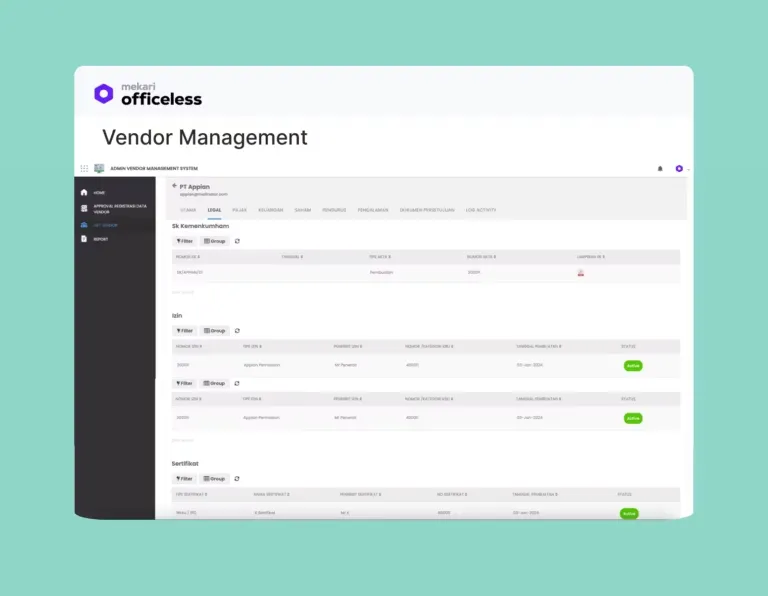
With capabilities such as Procure-to-Pay (P2P), e-sourcing, vendor and contract management, quotation handling, and real-time analytics, it helps businesses streamline operations with greater efficiency and accuracy.
- E-sourcing: Facilitate competitive vendor bidding and collaboration in one platform with structured data for better sourcing decisions.
- Vendor management: Centralize vendor information and performance tracking to support evaluation, risk assessment, and compliance monitoring.
- Quotation management: Automate RFQ processes to reduce manual errors, accelerate procurement cycles, and ensure accurate documentation.
- Reporting & analytics: Access real-time dashboards to monitor spend, analyze supplier performance, and support strategic decision-making.
By centralizing workflows and data, Mekari Officeless eProcurement improves visibility into spending, reduces operational costs, and ensures compliance with both internal policies and external regulations.
References
Ivalua. ‘’Source-to-Pay Process: 8 Steps, Benefits & Implementation Guide’’
Zip. ‘’Source-to-pay: Streamlining procurement from end to end’’