


Each Glide alternative offers different strengths depending on your business size, technical requirements, scalability needs, and operational complexity. Here are the main takeaways from each platform:
- Mekari Officeless stands out for Indonesian enterprises that need scalable workflow automation, operational governance, analytics, and integration with business systems.
- Adalo is one of the best Glide alternatives for businesses that want to publish native mobile apps directly to the App Store and Google Play Store.
- AppSheet is ideal for teams already using Google Workspace and looking for spreadsheet-based apps with offline support and simple automation.
- Bubble offers the highest flexibility and customization for building complex SaaS products and advanced web applications.
- FlutterFlow is best suited for teams that want exportable Flutter source code and long-term ownership of their mobile apps.
- Retool is a strong choice for IT and engineering teams building data-heavy internal tools connected directly to databases and APIs.
- Softr is a user-friendly option for SMBs that want secure portals and internal tools with predictable flat-rate pricing
Glide is widely known as one of the easiest no-code platforms for turning spreadsheets into polished apps, making it a favorite among business teams. However, as teams scale, limitations like unpredictable per-user pricing, limited customization, no native app publishing, and slower performance with large datasets often become more noticeable.
This reflects a growing shift in the market, with Gartner predicting that 70% of new enterprise applications will use low-code or no-code technologies by 2025. In this article, we’ll explore the 7 best Glide alternatives for businesses looking for more flexibility, scalability, and enterprise-ready features.
What is Glide and why do teams look for alternatives?
Glide is a no-code platform that helps businesses turn spreadsheet data from Google Sheets, Airtable, and Excel into polished mobile-first Progressive Web Apps (PWAs) without coding. Many teams use Glide to quickly build internal tools such as CRMs, dashboards, project trackers, employee directories, and inspection checklists.
Some of Glide’s biggest strengths include:
- Highly intuitive for non-technical users
- Clean mobile-first UI out of the box
- More than 400 ready-to-use templates
- Built-in Glide AI for simple automation
- Enterprise-grade security features like SOC 2 Type 2 certification and SSO
However, as teams grow, many businesses begin looking for alternatives due to several limitations, such as:
- Pricing that scales poorly, with the Business plan starting at $199/month plus additional per-user fees
- No native app store publishing because Glide apps only run as PWAs
- Limited UI customization and lack of pixel-level design control
- Spreadsheet-first backend that struggles with large datasets, complex relational data, and high-frequency writes
- Lack of version control for larger collaborative teams
- Limited workflow automation for advanced approval flows and multi-step processes
For enterprises in Indonesia that need more than a polished spreadsheet interface, especially businesses requiring scalable app development, deeper workflow automation, and integration with existing enterprise systems, there are several Glide alternatives that may be a better fit.
The platforms below are listed in alphabetical order and do not reflect rankings or overall preference.
1. Adalo
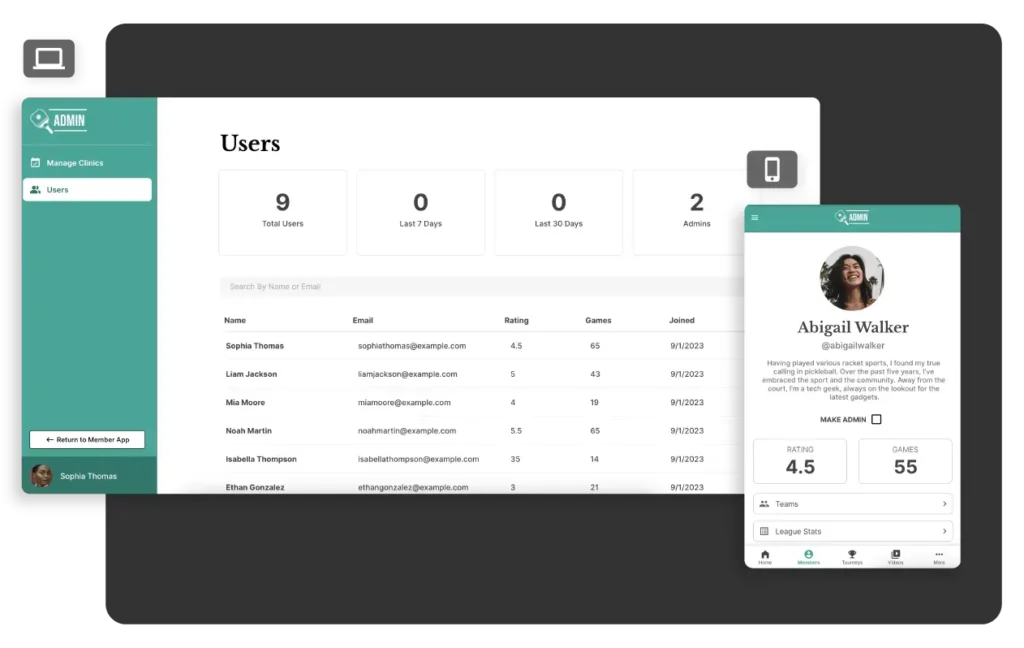
Adalo is a no-code visual builder focused on native mobile app development, allowing non-technical users to design and publish apps directly to the Apple App Store and Google Play Store, something Glide cannot do natively.
Best for: Startups, SMBs, and solo builders that need to launch client-facing or simple internal native mobile apps quickly with predictable pricing.
Key features:
- Drag-and-drop builder for native iOS and Android apps
- Direct app store publishing without third-party services
- Visual database setup with community-built components
- Fixed pricing from $36–$200/month
- 80% of users reportedly launch their first app within weeks
Limitations:
- Not ideal for complex enterprise logic or large datasets
- Performance at scale has historically been a concern
Pricing: Free to $200/month
2. AppSheet
AppSheet is Google’s no-code platform for turning Google Sheets, Excel, and other data sources into mobile and web apps. It is tightly integrated with Google Workspace and backed by Google’s infrastructure.
Best for: Teams working within the Google ecosystem that need data-driven apps with offline support and simple automation.
Key features:
- Highest-rated Glide alternative on G2 with 4.8★ ratings
- Named a Forrester leader in mobile low-code/no-code platforms
- Builds apps directly from Google Sheets, Excel, Cloud SQL, and more
- Offline functionality with automatic sync when reconnected
- Google AI integration for predictions and document processing
- Free for teams already using Google Workspace
Limitations:
- Limited UI customization and design flexibility
- Better suited for internal tools than advanced operational workflows
Pricing:
- Free with Google Workspace
- Starter: $5/user/month
- Core: $10/user/month
3. Bubble
Bubble is one of the most powerful general-purpose no-code web app builders, offering complete control over design, backend workflows, and app logic.
Best for: Product teams and developers that need advanced customization and are comfortable with a steeper learning curve.
Key features:
- Full frontend and backend visual builder
- Marketplace with 1,000+ plugins and extensions
- Advanced logic and custom JavaScript support
- Suitable for SaaS products, marketplaces, and custom CRMs
Limitations:
- Steep learning curve
- No source code export
- Usage-based pricing can become expensive at scale
- US-only hosting may impact performance in Indonesia and Southeast Asia
Pricing:
- $29–$349/month per app
- Custom enterprise pricing available
4. FlutterFlow
FlutterFlow is a professional-grade visual builder powered by Google’s Flutter framework that generates exportable Flutter code for native mobile apps.
Best for: Technical founders and development teams that want full ownership of their app source code.
Key features:
- Generates real Flutter source code
- Direct publishing to iOS App Store and Google Play Store
- Connects to Firebase, Supabase, MySQL, and REST APIs
- Pixel-level UI customization
Limitations:
- Not fully no-code
- Requires Flutter expertise for advanced customization
- Steeper learning curve than Glide or Softr
Pricing: Free to custom enterprise plans
5. Mekari Officeless
Mekari Officeless is an enterprise software development platform designed to accelerate business app creation, workflow automation, and operational analytics as part of the Mekari ecosystem.
Unlike Glide, which focuses on spreadsheet-based apps, Mekari Officeless is built to support structured enterprise workflows, governed operational processes, and deeper business system integration.
Best for: Mid-to-large Indonesian enterprises that need scalable workflow automation, operational apps, analytics dashboards, and integration with existing business systems.
Key features:
- Enterprise no-code/low-code platform for operational apps such as HSE management, e-procurement, facility management, and visitor management
- Visual workflow automation with multi-step conditional approval routing
- Real-time analytics dashboards for KPI monitoring
- Prebuilt enterprise-ready modules for faster deployment
- Expert implementation and custom workflow services
- Native integration with Mekari Expense, Mekari HR, Mekari Jurnal, and third-party systems
- Enterprise-grade security and role-based access management
Why it’s better than Glide for Indonesian enterprises:
Glide works well for lightweight spreadsheet-based apps, but it struggles with enterprise-grade workflows, process automation, and integration with core systems like ERP and HRMS. Mekari Officeless offers the speed of no-code development while providing the governance, scalability, and integration depth required by larger Indonesian enterprises.
Limitations:
- Focused on enterprise operational workflows rather than consumer apps or SaaS MVPs
6. Retool
Retool is a low-code platform built for creating internal tools connected directly to databases, APIs, and enterprise systems.
Best for: Engineering and IT teams that need advanced dashboards, admin panels, and back-office tools.
Key features:
- Drag-and-drop builder connected directly to databases and APIs
- Git integration and version control
- Self-hosting support for enterprise security requirements
- Mobile support with offline functionality
Limitations:
- Requires SQL and JavaScript knowledge
- Not fully no-code
- Can become expensive for large teams
Pricing:
- $12–$50/user/month
- Custom enterprise pricing available
7. Softr
Softr is a no-code platform for building web apps, internal tools, CRMs, and portals from Airtable or Google Sheets with stronger permission controls and more predictable pricing than Glide.
Best for: SMBs and business teams that want secure internal tools and client portals built from spreadsheet data.
Key features:
- Drag-and-drop builder with granular permissions management
- SOC 2 Type 2 certified
- Flat-rate pricing without Glide-style per-user editor fees
- Trusted by more than 500,000 companies including Google and Harvard Business School
- Users report up to 40% faster development compared to traditional coding
Limitations:
- Still dependent on spreadsheet-style databases
- Less suitable for complex relational data or advanced workflow automation
Pricing: Free to $269/month with custom enterprise pricing available
Why Mekari Officeless is the best Glide alternative for Indonesian enterprises
Glide works well for building quick spreadsheet-based internal apps. However, as Indonesian enterprises grow and operational complexity increases, businesses often need more than a polished interface connected to spreadsheets.
They need structured workflows, governed approval systems, scalable operational apps, and real-time analytics integrated with their core business software.
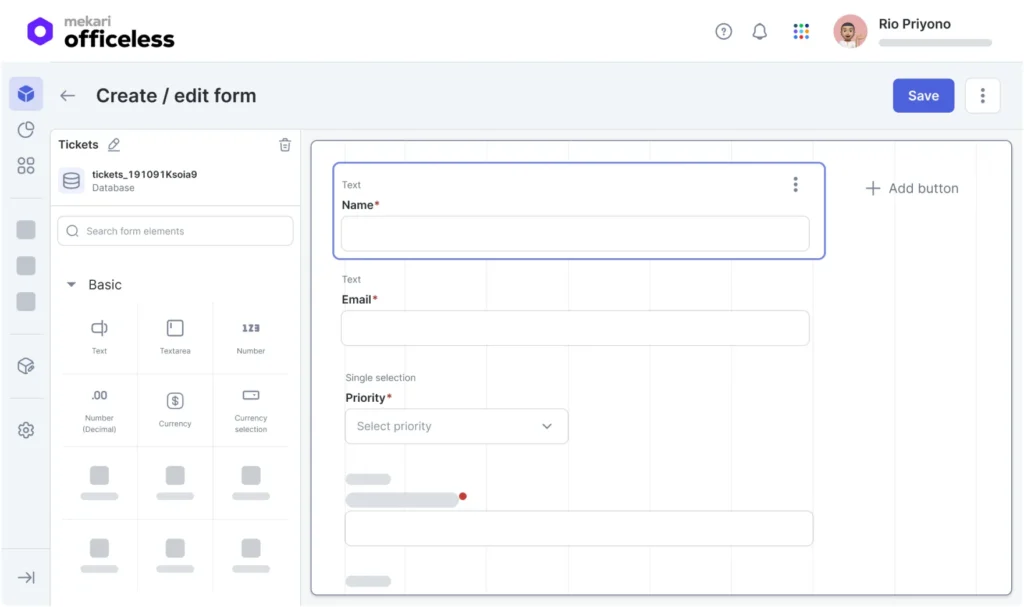
This is where Mekari Officeless stands out.
Compared to Glide, Mekari Officeless offers deeper enterprise capabilities, including:
- Structured operational infrastructure instead of spreadsheet-based app layers
- Visual workflow automation with multi-step and multi-stakeholder approval flows
- Real-time analytics dashboards for operational KPI monitoring and decision-making
- Enterprise-grade app deployment across departments such as HR, procurement, compliance, and facility management
- Native integration with Mekari Expense, Mekari HR, Mekari Jurnal, and third-party systems
- Enterprise security, governance, and role-based access management
While Glide focuses on lightweight internal tools, Mekari Officeless is designed for enterprises that need scalable workflow automation and connected digital operations across the organization.
For Indonesian enterprises that are serious about digital transformation, not just digitizing spreadsheets, Mekari Officeless is a stronger long-term alternative to Glide.
Discover how Mekari Officeless can support your enterprise operations and workflow automation needs.
References and methodology
Methodology
Methodology
Articles published by Mekari Officeless are developed using trusted sources, including official data, company reports, academic research, and insights from industry practitioners. Whenever possible, we refer directly to primary sources before drawing conclusions. Our editorial team reviews and verifies the information to ensure accuracy and relevance. All references are listed so readers can trace each piece of information back to its original source.
Our editorial standards
Our editorial standards
- Primary source first: We consult official product documentation and pricing pages directly, not secondhand summaries or aggregator sites.
- Fact-checking: All product features, pricing, and claims are cross-verified against each platform’s official website at the time of writing.
- No paid placement: Tools are selected based on relevance and fit for Indonesian businesses, not commercial arrangements. Mekari Officeless is included as a first-party product and is transparently labeled as such.
- Regular review: Articles are periodically updated to reflect product changes or shifts in market relevance.